
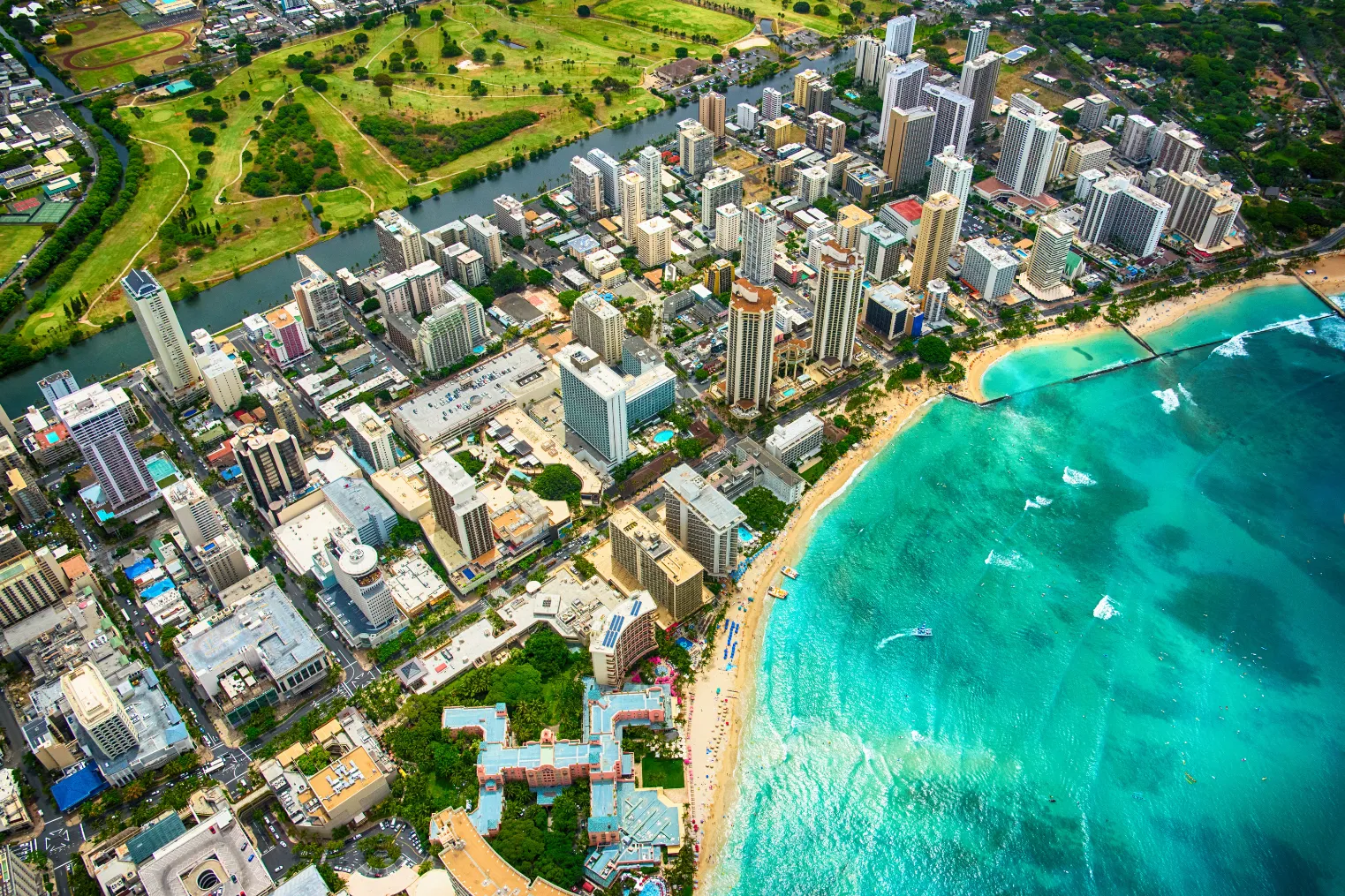
What you might not know is that Oahu’s best waterfall views from a helicopter depend less on the route and more on rain in the last day or two. You can lift off over bright blue coastlines, then spot silver ribbons pouring down the Koolau cliffs, or just dark rock with a damp sheen. Pilots also keep a careful distance, so your photos need realistic expectations. The trade-offs get interesting fast.
Key Takeaways
- Waterfall views are best within 24–72 hours after good rain, especially November through March; summer flights may show only trickles or bare rock.
- The Koolau Mountains on Oahu’s windward side usually offer the strongest waterfall sightings, often along routes past Diamond Head, Hanauma Bay, and Makapuu.
- Helicopters typically view waterfalls from about 200–500 feet away, with pilots keeping safer distances near unstable cliffs, homes, or protected areas.
- Sacred Falls can be spectacular after rain, but pilots view it from a safe distance and avoid tight valleys or unstable rock walls.
- Doors-off flights give cleaner photos and better angles, while doors-on flights are quieter, warmer, and more comfortable in wind or spray.
What’s Realistic on an Oahu Waterfalls Tour?
Often, the biggest surprise on an Oahu waterfalls helicopter tour is that the best waterfall views depend on nature’s mood. On a 45 minute Helicopter Tour, you won’t always see roaring waterfalls. In rainy months, cliffs in the Koolau range shine with long silver ribbons. In drier stretches, some channels shrink to trickles or bare rock. You can still spot famous landmarks like Sacred Falls from a safe distance, since pilots avoid unstable walls and tight valleys. Sacred Falls is one of the notable waterfall sights people hope to glimpse on Oahu helicopter routes. If photos matter, choose doors-off. You’ll get cleaner shots without plexiglass glare, and the wind adds a little thrill. Mid-morning often brings crisp light and less haze than late afternoon. Keep practical stuff in mind. Weight rules and a 48-hour cancellation policy can complicate chasing perfect conditions.
Which Route Shows Oahu Waterfalls Best?
You’ll usually get the best waterfall views when your pilot tracks the Koolau range east of Honolulu, then follows the windward side where steep green valleys spill into narrow falls. On many flights, you’ll sweep past Diamond Head, turn toward Hanauma Bay and Makapuu, and then spot waterfall-fed gulches etched into the cliffs like wet brushstrokes. Scenic Oahu helicopter routes often connect these landmark passes with the island’s most dramatic windward valleys. Sacred Falls is the star if weather cooperates, and when recent rain wakes it up, that 1,200-foot drop can steal the whole show.
Windward Waterfall Corridor
The windward waterfall corridor is the route that usually shows Oahu’s falls at their best, tracing the Koolau side where steep green cliffs spill with narrow white ribbons of water. On the Windward Waterfall Corridor, you’ll usually fly west to east, low and slow, so you can scan gullies between Kaneohe and Waimanalo for fresh cascades after rain. This scenic leg is a standout on many Oahu helicopter tours, especially when recent showers have refreshed the cliffs.
- Expect narrow plunges and surprise seasonal threads.
- Pick doors-off flights for cleaner photos and better angles.
- Aim for mid-morning or early afternoon light.
- Watch valleys circle into view near Sacred Falls.
Pilots often hug the space between Makapuu or Lanikai and the ridgeline, then arc around valleys to reveal several falls in one pass. Clear skies make every cliff look freshly painted, and your camera hardly rests long.
Sacred Falls Visibility
Because Sacred Falls hides in a steep notch of Manao Valley, the best helicopter view usually comes on a route that follows the Koolau cliffs and then sweeps the Makapuu or Lanikai side of the windward coast. On that line, you can spot the narrow gorge, the sheer drop where Sacred Falls once poured more than 1,000 feet, and tributary falls carving green folds in the valley walls. From the air, Kaneohe Bay and nearby Kualoa also stand out on this windward side, giving you a wider sense of how the cliffs, valleys, and coastline connect. Doors-off flights help a lot. You get cleaner sightlines, better photos, and a feel for the cliff texture when the pilot slows for a close pass. Rain matters too. Book for November through March if you want ribbons of water. In summer, the channel looks dry, so ask to confirm Koolau cliffs and Sacred Falls viewing.
Still comparing Waterfalls Helicopter Tour: What’s Realistic?
Ask for tour ideas, hotel suggestions, or a simple trip plan that combines both.
Trip Helper
How Close Do You Get to Waterfalls?
You’ll get surprisingly close to Oahu’s waterfalls, often within a few hundred feet, as the helicopter makes smooth fly-by passes and slow loops for a clear look. Your pilot won’t land at the falls or hug the cliffs too tightly, since wind, spray, and steep terrain call for a safe flight path that still feels thrilling. On a clear day, you can pick out the texture of the rock and the streaks of water, and if you choose a doors-off flight, your photos won’t have a window sneaking into the shot.
Viewing Distance
From the air, you usually get surprisingly close to Oahu’s waterfalls without feeling like the helicopter is crowding the cliffs. Think closer than Hanauma Bay to Diamond Head views, though not Big Island lava-close. On most tours, you’ll pass within a few hundred feet, enough to read the drop lines, dark rock seams, and bright green ledges. If weather cancellations affect your tour day, pilots may keep a slightly wider viewing distance around cliffs and waterfalls for safety.
- You often view falls from about 200 to 500 feet away.
- Doors-off seats make spray, shadows, and plunge pools easier to see.
- Wet weather boosts the white streaks and misty glow.
- Hidden falls may stay 500-plus feet away or appear at an angle.
You won’t skim directly over the water. Instead, you’ll get broad, clear looks that feel dramatic, safe, and photo-friendly too.
Pilot Flight Path
Trace the flight path, and the answer gets more interesting than a simple distance number. You don’t just hover beside a waterfall. Your pilot usually sets up a slow pass near spots like Sacred Falls or the Koolau cascades, often about 100 to 300 feet away horizontally, while staying roughly 300 to 800 feet above the ground. That gives you dramatic views and solid photo angles without crowding the cliffs. On doors-off flights, you get cleaner sightlines, louder wind, and a great experience for shooting misty walls of green after sweeping over sandy beaches. Some falls stay farther away, especially near homes or protected land, where you may view them from 1,000 feet or more. Weather, aircraft type, and weight shape the line each day. Before the route even begins, your operator will confirm the departure point on Oahu, which can affect timing and the overall flow of the tour.
When Do Waterfalls Look Best From the Air?
Usually, Oahu’s waterfalls look their best from the air within 24 to 72 hours after a solid round of rain, when thin rivulets turn into full white ribbons down the cliffs. Your best odds come from smart rain timing, especially on the windward Koolau side.
- Book wet season flights for more reliable volume and seasonal clarity.
- Look for morning mist and low cloud layers on early departures.
- Wait a day after severe storms so muddy runoff can settle.
- Choose midday after moderate rain if you want stronger flow and brighter contrast.
Rain can also affect whether an Oahu helicopter tour should go ahead or be rescheduled, so conditions matter as much as recent rainfall totals. If summer has been dry, some famous falls shrink to silver threads, so ask what changed in the last few days before you fly. That little weather check can save your expectations easily.
Should You Choose Doors-Off or Doors-On?
Think of this choice as the moment you dial in the kind of ride you want. If photos lead the plan, choose doors-off. You’ll get cleaner views of waterfalls, cliffs, Sacred Falls, secret beaches, Pearl Harbor, and the Koolau Mountains with no glare. It’s ideal for camera settings and wider angles. If you want shelter from wind and spray, doors-on feels calmer, especially with noise considerations, cold sensitivity, or loose gear. On many doors-off tours, wearing hats is discouraged or not allowed because strong rotor wash can blow them away.
| Option | Best for |
|---|---|
| Doors-off | Photo quality, open views |
| Doors-on | Comfort, warmth, easier gear control |
Both options leave from Castle & Cooke Aviation at Honolulu International Airport daily, 9:00am to 5:00pm. Check weather, confirm seat selection when booking, and remember pilot discretion may affect doors-off availability.
What’s Included in the 45-Minute Flight?
Once you’ve picked doors-off or doors-on, the 45-minute route gives that choice something spectacular to work with. Your boarding details start at the Castle & Cooke Aviation building at Honolulu International Airport, then the island quickly opens beneath you.
- Diamond Head gets a slow loop, with Waikiki’s towers and bright Pacific beaches beside it.
- Hanauma Bay, Makapuu Lighthouse, and Lanikai Beach deliver classic flight highlights.
- The Koolau Mountains rise green and folded, with Sacred Falls, inland cascades, and secret beaches appearing when weather cooperates.
- Pearl Harbor comes into view too, including the USS Arizona Memorial.
This route works well for travelers comparing route and style options, since it balances headline landmarks with the best odds for dramatic waterfall views. Photography is encouraged the whole time, so keep simple photo tips in mind. Doors-off gives you the cleanest waterfall and coastline shots. Wind-tossed hair objects aloft, loudly.
What Should You Wear and Bring?
Dress for wind, sun, and a little thrill, because this 45-minute flight can shift from warm cabin light to breezy open-air rush fast. You’ll want loose clothes, breathable shirts, and a light jacket you can peel off or zip up quickly. Think sun protective layers, not bulky outfits. Sunglasses help with glare bouncing off clouds and the ocean. Skip a loose cap unless it has a chin strap.
Bring your ID, booking confirmation, and a phone or small camera with full battery and storage. You’ll want camera securement options like a wrist strap or neck strap for Diamond Head, Hanauma Bay, and Sacred Falls. For doorless flight etiquette, leave scarves and dangling accessories behind. Rotor wash is no joke. Your lap will thank you later. Closed-toe shoes are also a smart pick among essential items for comfort and safety during boarding.
What Are the Weight and Child Rules?
After you’ve sorted your jacket and camera strap, check the seat rules too, because helicopters count every passenger differently than a shuttle to the beach. Before the rotors thrum, know these seat policies:
- Children 24 months and under qualify for infant seating on a responsible adult’s lap at no charge.
- Kids 24 months and older need their own seat and a full fare ticket.
- If you weigh 250 to 274 pounds, expect weight fees equal to 50% of the seat price.
- At 275 pounds or more, you must buy a second seat in advance.
These limits reflect standard weight guidelines used for Oahu helicopter tours and help operators balance the aircraft safely. These limits protect safety, so give accurate weights at booking or check-in. If anything changes, use your Booking Confirmation contacts. They matter more than your flip-flops, even if nobody claps.
What Is the 48-Hour Cancellation Policy?
If your plans shift, act early, because this tour’s 48-hour cancellation policy is firm. You need to cancel or reschedule at least 48 hours before departure to stay inside the refund window. That cutoff uses the scheduled start on your booking, so confirmation timing matters. This 48-hour cancellation policy applies to Oahu helicopter tours and determines whether you can receive a refund or make changes.
| Timing | What happens |
|---|---|
| 48+ hours before | Refund, credit, or change possible |
| Under 48 hours | Non-refundable, no reschedule |
| Cutoff clock | Based on confirmed start time |
| Doors-on | Same policy applies |
| Doors-off | Same policy applies |
Check your Booking Confirmation for provider contact and instructions. If weather in your schedule changes, don’t wait around listening to island breezes. Move fast and you’ll keep your options. The rule applies to doors-on and doors-off flights, so plan ahead and keep those waterfall views possible too.
Frequently Asked Questions
Is Parking Available at the Departure Location?
Yes, you can usually find parking near the departure location, but you should confirm details and fees first. Valet parking isn’t mentioned, Shuttle service isn’t offered, and Nearby garages or airport lots may work best.
Can Passengers Prone to Motion Sickness Still Enjoy the Flight?
Yes, most 45-minute flights feel manageable, so you can still enjoy it with motion sickness remedies, seated positioning tips, and pre flight medications. You’ll do best facing forward, watching the horizon, and choosing doors-on seating too.
Are Pilot Narrations Available in Languages Besides English?
No, you shouldn’t expect pilot narrations beyond English. You won’t typically get audio translations, multilingual headsets, or recorded commentary in other languages, so contact the provider ahead, bring a bilingual companion, or use translation app.
Is the Helicopter Tour Wheelchair Accessible?
Like threading a needle, you’ll find limited wheelchair accessibility: you can access ground facilities, but you’ll need a wheelchair transfer into the helicopter. Confirm boarding assistance and accessible seating options with the operator before booking.
How Far in Advance Should You Book This Tour?
You should book 1–3 months ahead during peak periods because Seasonal demand fills flights fast. For Best timing on quieter weekdays, 1–2 weeks usually works. Don’t wait Last minute unless you’re okay with nonrefundable rules.
Conclusion
Book this tour with clear eyes and a little weather luck, and you’ll get the best kind of surprise. After a good winter rain, Oahu’s cliffs can light up with silver ribbons in just 24 to 72 hours. It’s like tuning an old radio and suddenly catching the perfect song. You won’t hover beside every fall, but you will see deep green valleys, wet rock shining, and cloud shadows moving fast. That’s the real magic.